
Am I a Highly Sensitive Person (HSP)?
Introducing HSP: Part 1
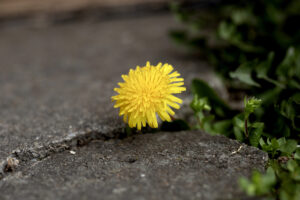
I was a college undergraduate student when I first stumbled upon the orchid-dandelion hypothesis. I was immediately intrigued, as I recognised myself as the ‘orchid.’ This floral metaphor is based on the idea of differential susceptibility. Two flowers are compared here: dandelions and orchids. Dandelions are ‘resilient’ and do well even amidst severe adversity. Orchids are flowers which are sensitive to their environments; that is, they will suffer if not tended to, but will flourish spectacularly when given adequate attention and care (Chhangur et al., 2012).
You may be here because you think you are an ‘orchid’ too, or as some researchers call it, a Highly Sensitive Person, or HSP. Perhaps you may wonder if your child or family member is, as well. My hope is to provide you with insight into decades of research on heightened sensitivity, and most importantly, how this isn’t a weakness.
This will be part one of a two part series of blog posts answering your questions about Highly Sensitive People, and their children.
In part one, we’ll explore:
- What is an HSP?
In part two, we’ll explore:
- Recognizing Signs of High Sensitivity in Children
The Orchid-Dandelion Metaphor

Now imagine this floral metaphor symbolizing all children. Researchers estimate that around 20-30% of children are born “orchids.” This is theorized to be determined by their genes. Scientists and researchers have found that some people are born with gene variants which are associated with heightened sensitivity to one’s environment (Lionetti et al., 2018). These individuals were only recently given another name: Highly Sensitive People (Aron & Aron, 1997).
Discovery of the Highly Sensitive Person (HSP)
Before being renamed, traits related to HSP were studied in research under other terms for several decades: fearfulness, inhibitedness, innate shyness, and vulnerability. Do you see a common theme? All are negatively connotated. Researchers began to ask: Why have these traits been passed down over generations if they are deemed so as weaknesses or vulnerabilities? Dr. Elaine Aron, author of The Highly Sensitive Person has an answer: they aren’t. As a result, Dr. Aron renamed this specific trait (Aron, 2002/2015). Further, after studying the characteristic for several years, she theorized that heightened sensitivity occurred more commonly than originally thought. In fact, there are estimates that nearly 30% of the population is highly sensitive (Lionetti et al., 2018) – that’s nearly one in three people you meet!
Are you a HSP? Take the free quiz by Dr. Aron here.
Why the Stigma?
So why, then, is sensitivity not widely recognized, or highly regarded? Or as Dr. Aron asks in her book The Highly Sensitive Child, “What is wrong with having a nervous system that’s extremely good at registering the subtle nuances in a given situation?”
According to Jay Belsky, a child development psychologist, a one-sided research focus on vulnerability in behavior genetics has plagued the field for many years. When we’re only looking for weaknesses in one’s genetic makeup, that is all we will find (Dobbs, 2009). Thus, bias in research directly influences the evidence that is found and shared with the public. As new hypotheses emerged and shifted perspectives on sensitivity, what was once seen as vulnerable was then reframed to one’s responsiveness to their environment. What was once seen as a risk became a possibility–a potential. With this shift, what was once a weakness became one’s super power over night.
Nature versus nurture. The old dichotomy that somehow haunts every psychology textbook. After many years of researchers debating which is more impactful in life, there is now enough evidence to predict that it is neither nature, nor nurture, but a combination of the two that influence our lives. In fact, this phenomenon can be best described as a complex gene-environment interaction (Dobbs, 2009). Whether you see yourself as a dandelion or an orchid, your genetic makeup AND your environment have an impact on your life, and even more so for HSPs.
Sensitivity to Environment
According to Dr. Aron, HSPs are “born with a tendency to notice more in their environment and deeply reflect… before acting” (Aron, 2002/2015, pg. 7). As a result of this tendency, they may become more easily overwhelmed and come across as shy, easily upset, or “too sensitive.” Aron also reports several qualities which are attributed to HSP; they are intuitive, careful, creative, conscientious, and empathic, among many (Aron, 2002/2015).

If you’re a Highly Sensitive Person, Aron would tell you: your brain simply processes information more thoroughly. You may have faster reflexes, be highly intuitive and have a deep sense of the emotions felt in those around you. You may be deeply empathetic and attuned to interpreting what those around you cannot speak–e.g. animals, babies, elderly adults with dementia (Aron, 2002/2015).
We will dive more into specific examples and characteristics in Blog #2.
What if I’m a HSP?
If you take away anything from this blog, may it be this: sensitivity does not equate to weakness. As Dobbs puts it in his article, if you suspect you have this gene variant, frame it as so: anything and everything you do to improve your own experience and environment will have a magnified effect (Dobbs, 2009). Finding out you have heightened sensitivity may explain a lot of your childhood experiences, perhaps memories that were once confusing will make more sense. Perhaps you felt misunderstood. This is a common experience shared by clients in therapy. We are still on the younger side of history that reframed this once perceived vulnerability as an opportunity for spectacular growth and flourishing.
Blog #2 will explore the signs of heightened sensitivity in children. While that audience will be for parents and professionals who work with children, it will also be written for those adults hoping to understand and heal their inner ‘highly sensitive’ child. Just like we can’t change our genes, we can’t go back and change our early environments. We can, however, take this knowledge of sensitivity and honor its power in our everyday lives moving forward.
Blog written by Sentier therapist, Bria Hubinger, MA, MEd, LPC
Sources List:
Aron, E. N., & Aron, A. (1997). Sensory-processing sensitivity and its relation to introversion and emotionality. Journal of Personality and Social Psychology, 73(2), 345-368.
Aron, E. (2015). The highly sensitive child: Helping our children thrive when the world overwhelms them. Harmony Books. (Original work published in 2002).
Chhangur, R. R., Weeland, J., Overbeek, G., Matthys, W., Orobio de Castro, B. (2012). ORCHIDS: an Observational Randomized Controlled Trial on Childhood Differential Susceptibility. BMC Public Health, 12(917). https://link.springer.com/content/pdf/10.1186/1471-2458-12-917.pdf
Dobbs, D. 2009. The Science of Success. The Atlantic. https://www.theatlantic.com/magazine/archive/2009/12/the-science-of-success/307761/
Hartman, S., & Belsky, J. (2016). An evolutionary perspective on family studies: Differential susceptibility to environmental influences. Family Process, 55(4), 700–712. https://doi.org/10.1111/famp.12161
Lionetti, F., Aron, A., Aron, E. N., Burns, G. L., Jagiellowicz, J., Pluess, M. (2018). Dandelions, tulips and orchids: evidence for the existence of low-sensitive, medium sensitive and high-sensitive individuals. Translation Psychiatry, 8(24). https://www.nature.com/articles/s41398-017-0090-6.pdf