When Your Child is Struggling, Play is How They Heal.
Watching your child pull away, melt down, or carry something they can’t put into words is one of the hardest things. At Sentier Psychotherapy, our dedicated child therapy team uses play therapy to help kids ages 0–11 process what words can’t reach.
We are currently accepting new clients at our St. Paul, MN office, serving families across St. Paul, Minneapolis, St. Louis Park, Mendota Heights, Roseville, Falcon Heights, Lauderdale, Maplewood, Little Canada, Arden Hills, and throughout the Twin Cities metro.
What Is Play Therapy? And Why Does It Work?
Play therapy is a structured, evidence-based form of counseling designed specifically for children. Rather than asking a child to sit and talk about their feelings, play therapy uses toys, art materials, sand, puppets, and creative play as the primary tools of the session. The child expresses through doing. The therapist listens through watching.
“Children communicate through play the way adults communicate through words.” -Adapted from principles outlined by the Association for Play Therapy
A trained play therapist understands the symbolic language behind what a child creates — what they reach for, avoid, or return to — and uses those observations to guide the therapeutic work at the child’s own pace. The Association for Play Therapy supports play therapy with multiple meta-analyses and controlled trials showing effectiveness for anxiety, trauma, grief, and social-emotional development in children ages 2 to 12.
Why Play Works Better Than Talk for Most Children Under 11
Our therapists specialize in seeing kids for counseling/play therapy ages birth to 11+ in St. Paul, MN
Most children haven’t yet developed the emotional vocabulary or abstract thinking skills needed for traditional talk therapy. Asking a five-year-old to explain why they feel anxious puts an adult cognitive expectation on a brain that’s still forming. Play removes that barrier. It meets children in the language they already speak naturally — and because it feels like play rather than therapy, children engage more freely, which is when the real work happens.
Our play therapy room at Sentier is stocked with sand tray materials, art supplies, puppets, building toys, books, building toys and more. Every material is chosen intentionally.
Play Therapy Can Help Your Child With:
You do not need a diagnosis before reaching out. If something is affecting your child’s daily life — sleep, school, friendships, or behavior — that is enough reason to start a conversation.
Not sure if your child’s concern is a fit? Reach out — we’ll talk through it.
What Happens in Play Therapy at Sentier
Play therapy sessions are 50 minutes, generally scheduled once per week. Here is what the process looks like from first contact through to completion:
1
Parent Intake
Before your child ever sets foot in the room, we start with you. This private meeting is your space to share what you’re observing, your child’s history, and the goals you have for therapy. Your child does not attend this session.
2
Session 1: Getting Comfortable
Your child enters the play therapy room — stocked with sand tray materials, art supplies, puppets, building toys, games, books and much more — and is given space to explore at their own pace. No expectations. No agenda. No pressure to talk.
3
Ongoing Sessions: The Real Work
Your therapist observes what your child gravitates toward, avoids, or returns to repeatedly. Themes emerge through play that a trained clinician can recognize and respond to. The work is child-paced and clinician-guided — gentle, purposeful, and unhurried.
4
Regular Parent Check-Ins
You are never left in the dark. Regular check-ins (we call them Parent Consultations) are built into the process — you’ll know how your child is responding and receive practical strategies to use at home between sessions, if needed. Your child’s trust is protected; updates are shared thoughtfully.
5
Transition: Wrapping Up
When goals are met, we don’t abruptly stop. Your therapist prepares a gradual, intentional close — giving your child time to transition out of therapy with the tools they’ve built, ready to use at home, school and in the world. Often our therapists will schedule with kids at this point once per month in order to see how the child maintains after therapy is not consistent. We often allow children to ease their way out of Child Therapy.
Your Role in Your Child’s Therapy
One of the most common questions before a first call: “Will I know what’s going on? Will I be involved?” The short answer is always yes.
You’re There From Day One
The process begins with a private parent intake/consultation before your child’s first session — your space to share, ask questions, and set goals. No child present.
Regular Check-Ins Built In
You will always know how your child is responding. Check-ins are a structural part of the process, not something you need to chase down.
Tools You Can Use at Home
You leave with practical strategies if this is something you need — not just progress updates. The work your child does in session extends into everyday life through what you bring home.
Your Child’s Trust Is Protected
Updates are shared thoughtfully — giving you what you need without compromising the therapy space your child needs to do the real work.
Family Therapy as a Complement
For families where the parent-child relationship is also part of the focus, Family Therapy may complement your child’s individual sessions. We’ll guide you on the right combination if your Child Therapist recommends Family Therapy.
What Makes Our Child Therapy Team Different
There are many therapists in the Twin Cities who work with children as part of a general practice. Our child therapy team is different.
4
Dedicated child therapists — not a side specialty in a general adult practice. Our playrooms are thoughtfully curated for children to thrive.
RPT
All four therapists are RPTS or are pursuing the Registered Play Therapist credential — the highest level or training in the children’s mental health field.
0–11
Full developmental range including infants and toddlers — a range many practices don’t serve with genuine depth.
DC 0-5
All of our Child Therapists hold DC 0-5 diagnostic training for early childhood mental health — rare in a community practice.
What Is the RPT Credential?
The Registered Play Therapist (RPT) is awarded by the Association for Play Therapy. It requires advanced coursework and a minimum of 150 supervised play therapy hours beyond the graduate level. When a therapist is working toward or holds the RPT, it signals a specific, focused commitment to child therapy — not a general counseling background with some experience working with kids.
Your Child’s Therapist in St. Paul
There are many therapists in the Twin Cities who work with children as part of a general practice. Our child therapy team is different.
Signs Your Child May Be Ready for Therapy
There’s no single threshold. But here are patterns worth paying attention to:
You do not need a perfect explanation before you call. A brief conversation with a therapist can help you figure out if play therapy is the right direction and what the first step looks like.
What Progress Looks Like
Progress takes time and is often subtle before it’s obvious. Watch for small shifts at home:
Some children see meaningful progress in 10 to 14 sessions. Others benefit from longer support. Your therapist will set goals with you at the start of therapy and will check in regularly — you will never be left guessing about where things stand.
Frequently Asked Questions
Questions parents ask most before the first call:



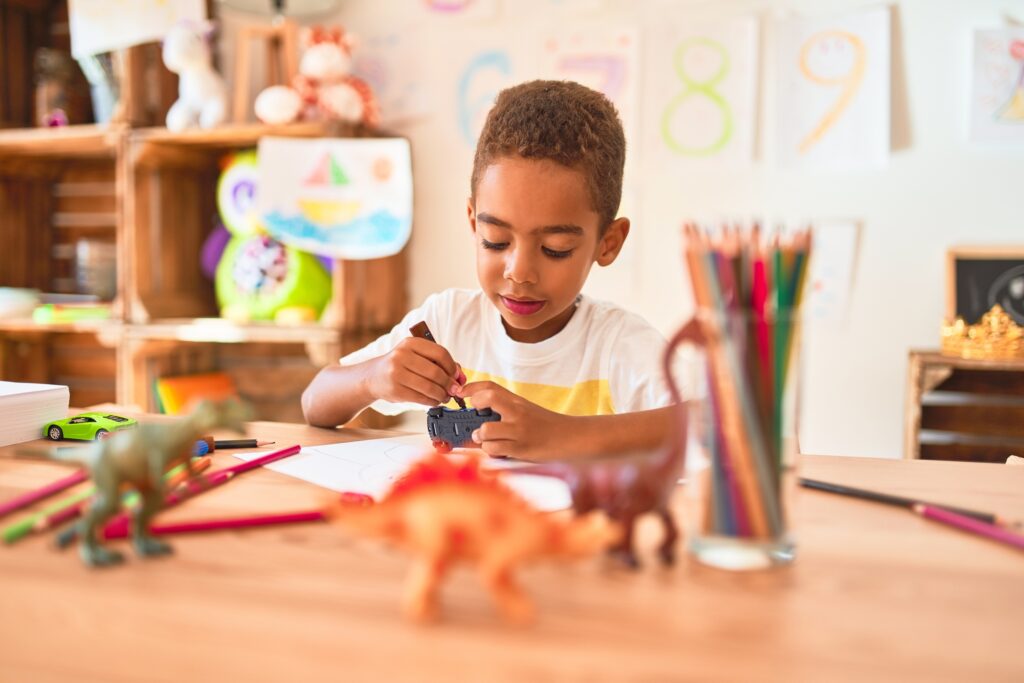




 Children who are experiencing sadness, depression, grief, anxiety, anger and other issues can often benefit from counseling. The most natural way for therapists to engage with these kids is through play, because play is the language of the child. Play is how kids best relate with others, communicate, and integrate their experiences.